Kavafam — The Kava Journal — Entry No. 05
First time
What Does Kava Feel Like? A First-Timer's Guide
A concrete walkthrough of the first shell — taste, numbing, the mental quiet, the social ease, and the landing — so "relaxed but alert" finally means something.
~8 min read

I should tell you upfront that I'm the kind of person who Googles the menu before going to a restaurant. I read ingredient lists recreationally. I once spent forty-five minutes in a grocery store in Silver Lake comparing two brands of fish sauce. So when a friend told me to try kava, I did what I always do: I researched it until the research became its own form of procrastination, and then I didn't go for another three months.
The hesitation wasn't about safety. I'd read enough to know it was fine. It was about not knowing what to expect from the inside. Every description I found online said some version of "relaxed but alert," which is the kind of phrase that tells you nothing. Relaxed how? Alert compared to what? Relaxed like a glass of wine, like a bath, like melatonin, like the last twenty minutes of a massage? These are all different things.
So I went. And now I'm going to be specific.
The first fifteen minutes
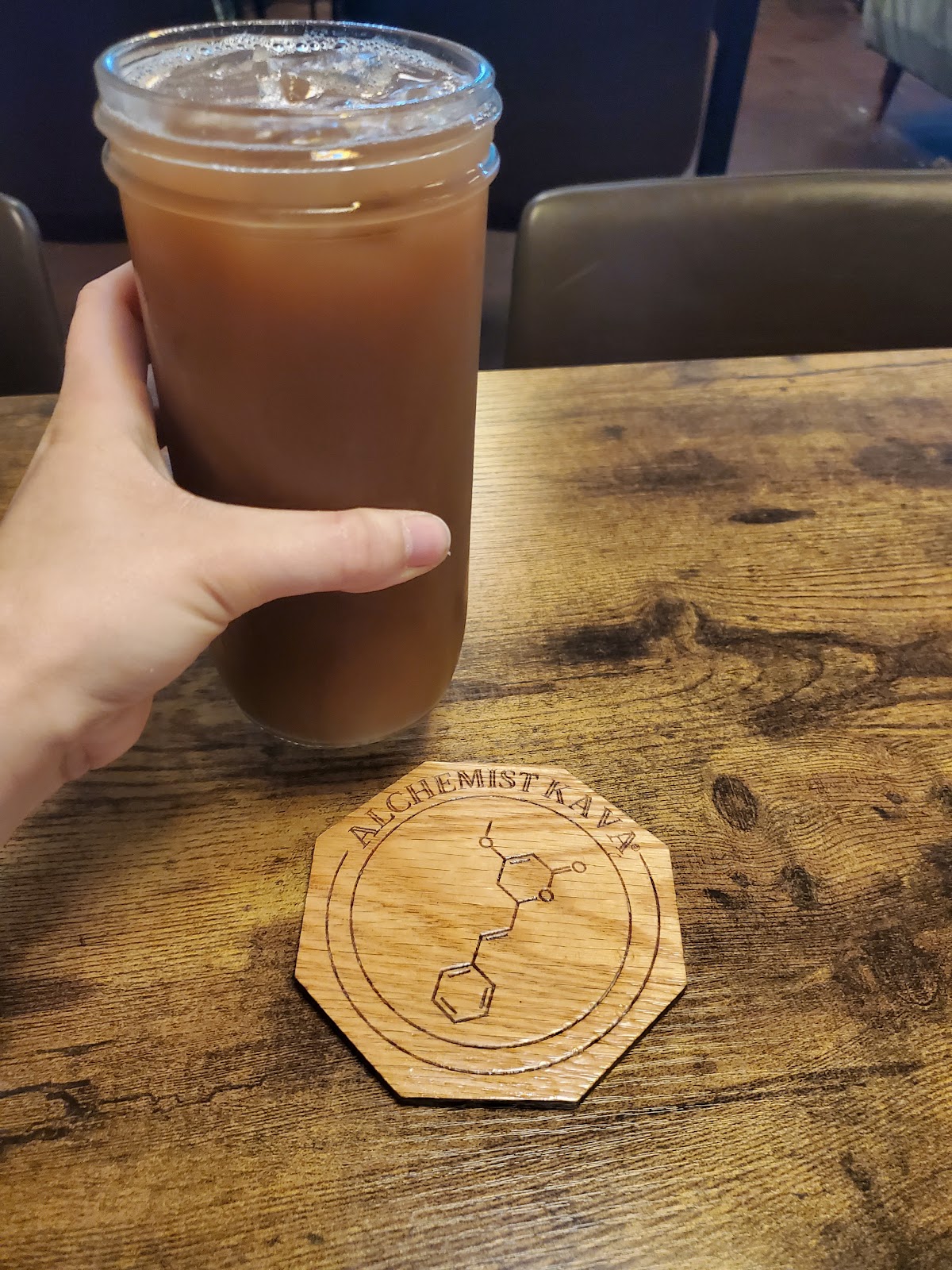
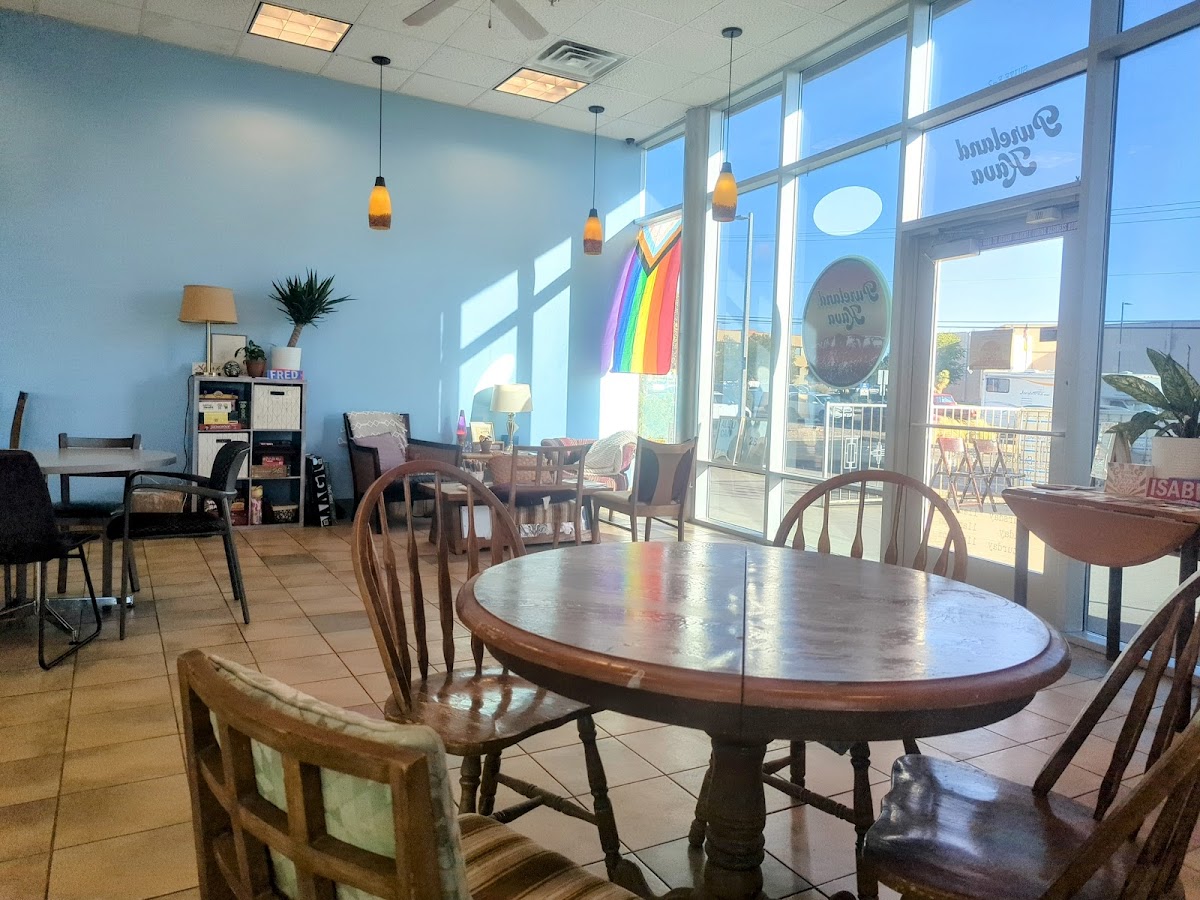
The place I went to was small, warm-lit, and quieter than I expected. I sat at the bar and ordered a shell, which is the standard serving size: about four to six ounces of kava in a coconut shell or a cup, depending on the bar. The bartender asked if I'd had kava before. I said no. She told me to drink it in a few steady gulps rather than sipping, and to chase it with something sweet. I got a coconut water on the side.
The taste. Okay. Let's be real.
Kava tastes like the earth. Specifically, it tastes like someone took a root out of the ground, dried it, ground it to powder, mixed it with water, and handed it to you. Because that is exactly what happened. It is not delicious. It is not awful. It is aggressively neutral in a way that makes your palate wonder what it's supposed to do with this information. The texture is slightly grainy, somewhere between muddy water and a thin smoothie that lost its will to live.
I drank it. I chased it with the coconut water. And then I waited.
The first thing that happened, maybe two or three minutes in, was the numbing. It starts at the tip of your tongue and spreads softly across the inside of your mouth. If nobody had warned me, I would have panicked. But the bartender had said this was normal, and it is. Kava contains compounds with local anesthetic properties; researchers have compared the numbing potency to procaine and cocaine. That sounds dramatic, but the actual sensation is mild. Your tongue gets tingly, your lips feel slightly thick, and your ability to taste diminishes for a little while. It passes. It is, in retrospect, a useful signal that the kava is working and that what you're drinking might actually do something.
After about fifteen minutes, the rest of it arrived.

Spinny wheel stops spinning
I don't have a better way to describe it than this: the wheel in my head stopped spinning.
I have the kind of brain that runs a constant background monologue. What I need to do tomorrow. What I said in that conversation last week that I wish I hadn't. Whether I responded to that email. Whether the thing I'm working on is good enough. Whether I'm good enough. It's not clinical anxiety, or at least I've never been diagnosed with anything. It's just the hum. Most women I know have some version of it. Most people, probably. You learn to live with it the way you learn to live with street noise.
Kava turned the volume down. Not off. Down. The thoughts were still there if I reached for them, but they had lost their urgency. The mental fist that stays clenched all day, scanning for problems, quietly loosened. My shoulders dropped. I hadn't realized they were up.
What surprised me most was that I could still think clearly. This is the part that every description gets wrong, or at least fails to make vivid. When I drink wine, the relaxation comes packaged with a slight fog. The edges soften, but so does my ability to follow a complex thought. Kava doesn't do that. My mind was calm and my mind was sharp, simultaneously, and those two states had never coexisted in my body before. I could hold a conversation, follow a story, notice details. I just didn't feel like the world was going to collapse if I stopped monitoring it for five minutes.
A 1977 double-blind study gave 400 milligrams of kavain (one of the six primary active compounds in kava) to patients with anxiety. It improved their vigilance, their memory, and their reaction time. Not despite the relaxation. Alongside it. A later study in 1993 compared kava extract directly to oxazepam, a benzodiazepine, and found that oxazepam slowed reaction time and reduced correct answers on cognitive tests. Kava slightly improved both. That tracks with what I felt sitting at that bar. I was the most relaxed version of myself who could also do mental math.
What is actually happening
Kava's active compounds are called kavalactones. There are fifteen known to exist in the plant, but six appear in meaningful concentrations. They act on the limbic system, the part of the brain that governs emotion, stress response, and how you relate to other people. The effect is anxiolytic, which is the clinical term for "reduces anxiety." Germany's Federal Board of Health approved kava for this purpose in 1990, which is worth noting because German pharmaceutical regulators are not known for being easily impressed by herbal medicine.
There's a wrinkle, though: the six kavalactones work together. A researcher named Klohs demonstrated in 1959 that isolated kavalactones are significantly weaker than the same compounds taken as a group. You'd need 800 to 1,200 milligrams of isolated dihydromethysticin (the most potent individual kavalactone) to produce a tranquilizing effect. A single coconut shell of traditionally prepared kava, containing roughly 250 milligrams of mixed kavalactones, does the same thing. The compounds amplify each other. The whole root is more powerful than any extracted piece of it.
Which explains why kava from a bar, where you're drinking actual prepared root, feels different from a kava supplement capsule you bought at Whole Foods. The bar version is the full orchestra. The capsule is one violin trying to fill the room alone.

The social part
About thirty minutes in, I noticed I wanted to talk to the person sitting next to me.
This is unusual for me. I am not shy, exactly, but I am selectively social in the way that many people who live alone in large cities become selectively social. I talk when I have something to say. I don't make small talk with strangers at bars. I don't strike up conversations with people I don't know unless there's a reason.
Kava created the reason, or maybe it removed the barrier. I'm still not sure which. The woman next to me said something about the music, and instead of giving a polite one-sentence response and turning back to my phone, I engaged. We talked for twenty minutes. It was easy. Different from the forced ease of alcohol, where you're friendly because your judgment is impaired. This was low-stakes and genuine. I was interested. I was listening. The part of my brain that usually evaluates whether a social interaction is worth the energy had taken the evening off.
Sahelian, the physician who wrote one of the foundational books on kava, calls this "feelings of affability." He describes watching a Tongan kava ceremony in Las Vegas where a room full of strangers, vitamin store managers seated on artificial turf next to Tongans in native dress, started opening up to each other after a few shells. Class distinctions dissolved. People sang.
I did not sing. But I did stay for two hours, which is about ninety minutes longer than I typically stay anywhere.
The landing
This is where kava and I parted ways with every other substance I've consumed socially.
There was no crash. No wobble walking to my car. No morning-after damage assessment. At some point around the two-hour mark, I felt a gentle tiredness settle in. Not drowsy in the way that Benadryl or a second glass of red makes you drowsy, with that heavy, slightly stupid feeling. Just... ready for bed. The kava had a natural arc to it, a beginning and a middle and an end, and the end was sleep.
I slept extraordinarily well. I woke up without a headache, without dehydration, without the low-grade guilt that sometimes follows a night out where alcohol was involved. My tongue was back to normal. I felt good, actually. Quietly, unremarkably good.
Clinical research backs this up, for whatever my single experience is worth alongside controlled studies. A 1993 study of forty volunteers found that kava extract did not impair driving ability or the operation of heavy machinery. A 1991 double-blind trial of fifty-eight anxiety patients showed significant anxiety reduction after just one week of kava use, with no adverse effects reported. And unlike benzodiazepines, which require increasing doses over time as the body builds tolerance, kava doesn't stop working. A dose that helps today will help the same amount two years from now. The body doesn't adapt to it the way it adapts to Xanax.
What I wish someone had told me
A few things I've learned from subsequent visits that would have helped on the first one:
Eat something beforehand, but not too much. Kava on a completely empty stomach can hit harder and faster than expected. A light meal an hour or two before is ideal. If you've eaten a large dinner, the effects may be muted. There's actual science behind this: a 1938 study found that the presence of fats and lipids enhances kavalactone absorption. So a handful of nuts, some avocado toast, a little coconut milk in your kava; these are functional choices as much as flavor ones.
Start with one shell. The effective range for anxiety relief is somewhere between 70 and 210 milligrams of kavalactones per day, depending on the source. A single shell at a kava bar typically puts you in that range. You can always have another. You cannot un-have one. And the first time, you want to know how your body responds before you stack doses.
The taste gets easier. Or rather, you stop caring about it. By my third visit I was drinking it straight without the chaser, the same way I eventually learned to drink espresso without sugar. The taste is an obstacle for about five minutes on your first visit and then it becomes background noise.
Pair it with something sweet. Most bars serve teas, kombucha, fruit drinks. Alternating between kava and something sweeter helps with the root's alkaline quality and keeps the experience balanced. Think of it as the palate cleanser between courses.
Kava is not what you think it is. Nobody is hallucinating. Nobody is losing control. Nobody is going to do something they regret. The whole experience is so mild that the closest analogy I can find is this: imagine the best version of how you feel after twenty minutes of meditation, except you didn't have to meditate. You just drank something that tastes like dirt and sat still for fifteen minutes. That's kava. The gap between the fear and the reality is enormous.
Why I went back
I could tell you it was the science that convinced me. The clinical studies, the favorable comparison to pharmaceuticals, the century-plus track record. All of that matters, and all of it is in the back of my mind every time I order a shell.
But honestly, I went back because of the quiet. That first evening at the bar, somewhere between the second shell and the conversation with the stranger beside me, I realized I hadn't checked my phone in over an hour. I hadn't mentally rehearsed a single conversation. I hadn't worried about anything. The wheel had stopped, and the world was still turning without it, and I was just sitting there, present, in a way that felt like something I'd been missing for a very long time.
That's what kava feels like. You feel like yourself, except the version of yourself that isn't bracing for impact.
I go about once a week now. Sometimes more. The bartenders know my order. I've become a regular, which is a word I never expected to use about myself and a place that serves ground-up root water in coconut shells.
If you're curious, go. Don't overthink it. Just walk in, sit down, and drink the mud.